


International Tea Day: From Grassroots Struggle to a Global UN Observance
- Admin
- 7 hours ago
- 4 min read
International Tea Day (ITD) has evolved from a workers’ rights campaign rooted in plantation realities to a globally recognised observance under the United Nations. Its journey reflects not only the cultural and economic importance of tea but also the struggles of millions of small growers and plantation workers across Asia, Africa, and Latin America.
Origins: December 15 and the 2005 Movement
“International Tea Day was first celebrated on December 15, 2005, following discussions at the World Social Forum in Mumbai (2004) and Porto Alegre (2005),” says J John, Founder, equifarmtea, and one of the initiators of International Tea Day. “It was conceived by global trade unions, small tea growers, and social organisations from countries such as India, Sri Lanka, Kenya, Nepal, and Vietnam.”

1st International Tea Day | New Delhi Declaration on the Rights of Tea Workers
The initial observance was not symbolic in nature. It was a direct social and political campaign. It highlighted deep structural inequalities in the global tea industry, particularly the fact that small tea growers often receive extremely low prices for green tea leaves, while plantation workers endure low wages, insecure employment, and poor living conditions.
“At its core, the movement demanded fair wages, housing rights, land rights, social security, and the empowerment of women tea workers, who form the backbone of plantation labour,” says Ashok Ghosh, General Secretary, United Trade Union Congress (UTUC).
The campaign also emphasised the need for collective bargaining, stronger labour protections, and equitable distribution of value along the tea supply chain.
Early Context: Crisis in the Tea Industry
During the early 2000s, the global tea sector was undergoing structural changes driven by liberalisation, WTO-linked trade policies, and increasing control of global brands over supply chains. These shifts led to falling commodity prices and growing instability in tea-producing regions.
Large plantations began closing or reducing operations, while small growers emerged as a major but vulnerable segment. At the same time, labour rights weakened in many regions due to reduced state intervention, declining union strength, and the erosion of social protections.

4th International Tea Day | Massive Gathering of Small Tea Growers at Islampur
A major outcome of this restructuring was that benefits increasingly flowed to multinational brands and intermediaries, while producers and workers at the base of the chain faced declining incomes and job insecurity.
The 2005–2016 Phase: Awareness and Mobilisation
Between 2005 and 2016, International Tea Day functioned as a global awareness and advocacy platform. Conferences and campaigns were organised in New Delhi and other tea-growing regions, bringing together delegates from multiple countries, including India, Bangladesh, Sri Lanka, Uganda, Tanzania, and Vietnam.
These gatherings helped shape a broader International Declaration on the Rights of Tea Workers and Small Growers, emphasising living wages, occupational safety, women’s rights, and fair pricing mechanisms. Campaign materials and advocacy networks were also developed to strengthen global solidarity.

Love for Teas - Small Tea Growers Demand For Their Rights On 12th International Tea Day 2016
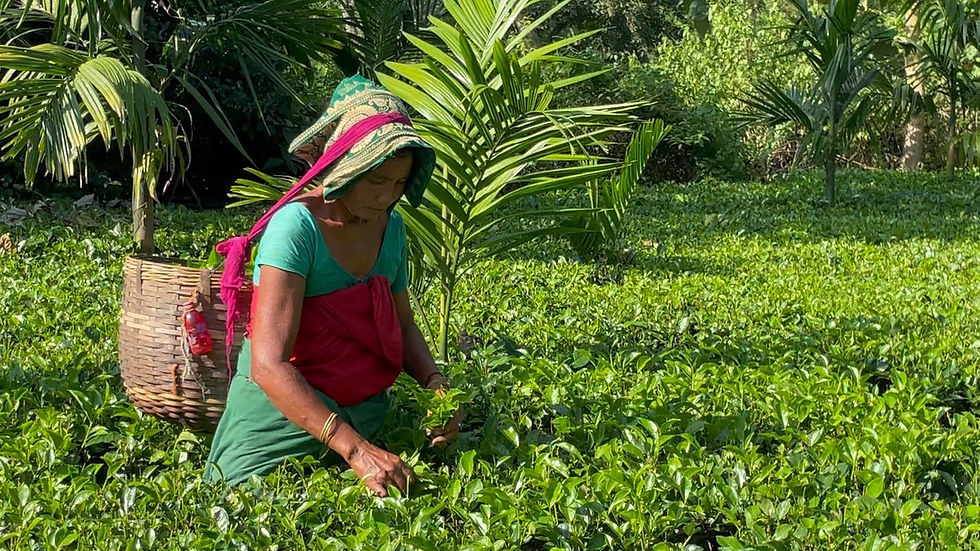
During this phase, ITD remained closely tied to grassroots activism, focusing on structural reform rather than ceremonial celebration. It also increasingly highlighted the role of women in plantation economies, especially in smallholder tea communities such as those in Karbi Anglong, where women entrepreneurs began processing artisanal green tea as a form of economic empowerment.
In tea-growing regions like Karbi Anglong in Assam, the contemporary relevance of International Tea Day continues to be shaped by grassroots initiatives led by rural women and small tea growers. Preparations for the 2026 International Tea Day observance in the Nilip, Bokajan, and Rongmongve blocks reflect how the movement’s original concerns around livelihoods, dignity, and sustainability are now increasingly connected to ecological resilience and community-led enterprise.
In a letter addressed to the Tea Board of India, Sujit Hazarika of Grassroots Tea Corporation Pvt. Ltd. described the 2026 theme as “Tea, Ecological Diversity and Sustainable Livelihood.” The programme aims to recognise and motivate Rural Women Entrepreneurs (RWEs) engaged in regenerative agricultural practices and the collective processing of Karbi Artisanal Green Tea.
The initiative also seeks to encourage more women to participate in climate-resilient tea production while strengthening sustainable rural livelihoods and local value addition. Importantly, it reflects a broader shift within tea-growing communities: from dependence on volatile commodity markets toward farmer-led and community-owned models of production.
Such efforts demonstrate how International Tea Day has evolved beyond symbolic observance into a platform connecting environmental sustainability, women’s empowerment, and equitable economic participation at the grassroots level.
From December 15 to May 21: UN Recognition
A major shift occurred in November 2019, when the United Nations officially recognised International Tea Day and moved its observance to May 21. The new date aligns with the peak tea-plucking season in many producing regions, symbolically connecting the observance to agricultural cycles.

Rural Women Entrepreneurs plucking tea leaves in Karbi Anglong district, Assam
Under the UN framework, the focus of International Tea Day expanded significantly. While labour rights and smallholder concerns remain important, the day now also emphasises:
Sustainable agriculture and climate resilience
Rural development and poverty reduction
International cooperation in the tea value chain
Long-term economic stability for producing regions
This transition marked the movement from a protest-driven observance to a global development-oriented platform.
Conclusion
International Tea Day represents a rare evolution of a global observance, from a worker-led campaign for justice in 2005 to a UN-recognised day focused on sustainability and rural development today. While its platform has broadened, its origins remain deeply rooted in the struggles of tea workers and small growers who continue to shape the industry’s future.
The story of ITD is ultimately the story of tea itself: global in reach, but local in impact, sustained by millions whose labour often remains invisible in the final cup.
Today, brands like equifarmtea are helping reshape this story by building farmer-owned, transparent value chains that directly connect small tea growers to consumers and ensure they receive a fair share of the value they create.


Comments